
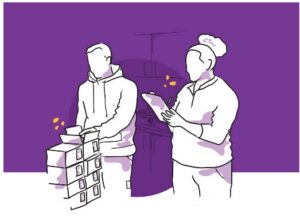
In harm reduction, best practice means giving people the supplies they ask for, in the amounts they need, without setting arbitrary limits. This helps people use new, sterile equipment every time and reduces the need to reuse or share supplies for injecting or inhaling drugs.
This approach is important. When programs are too restrictive, people may not get enough supplies to meet their needs. This can lead to more reuse and sharing, which increases the risk of HIV, hepatitis C, and other health harms. Providing supplies based on people’s actual needs supports safer use and better access to care.
The realities are that programs work within real limits. Stock can run low because community demand is outweighing what is available. Quantities being asked for by service users may be posing a strain on inventory and the ability to maintain healthy inventory levels for the whole community.
For example:
- Fixed site storage space can be small.
- Mobile outreach teams may only be able to carry a certain amount.
Ensuring you don’t run out of supplies and practicing good inventory management practices is key to equitable community distribution.
A “practical unlimited approach” can make sure operational constraints do not become barriers to supply access. “Practical” means making flexible, real-world decisions that balance inventory realities with meeting people’s needs. It includes what is feasible without sacrificing the goal of sufficient inventory.
For example:
- A fixed site may be able to give enough supplies for one or two weeks.
- A mobile team may only be able to provide enough for a few days and then reconnect soon after.
Here are some practical ways programs can support this approach:
- Plan ahead to avoid shortages
Good inventory management practice helps ensure community agencies have enough supplies available to meet demand, support safer use practices, and avoid interruptions in service. - Be transparent with service users
If stock is temporarily low, clearly explain the situation and offer a plan for follow-up while ensuring service users still receive enough supplies to stay safe. - Understand service user needs
This includes respectfully inquiring about large requests to better support individual and community use.
- Understand and support secondary distribution
Know when people are picking supplies for others. Treating secondary distributors as partners helps extend the reach of harm reduction services and health messaging into the community, especially in rural or hard-to-reach areas. - Educate staff on the practical unlimited approach
Staff need to understand both the reasons for needs-based distribution and how to respond when operations are strained. Staff also need to understand how to have conversations with service users about large bulk requests and may need to make decisions to give or not give the amount requested. If staff cannot fulfil a request they should provide the service user with a clear respectful explanation.
Best practice remains the standard. Practical unlimited distribution helps programs stay as close to that standard as possible while keeping services reliable, respectful, and responsive.